W8linak, Land of the Abenakis
W8linak is one of Quebec’s two Abenaki communities and one of the many communities that make up the great W8banaki Nation. Located along the banks of the Bécancour River in the Centre-du-Québec region, the community was officially founded in 1704. Today, it remains a place where history, culture, and traditions continue to thrive every day.
A traditional way of life
A deep relationship with nature
The relationship with nature remains at the heart of W8banaki culture. Animals, plants, rivers, and forests are viewed as living beings with whom humans maintain a relationship of respect and reciprocity. This worldview is based on the idea that human beings are an integral part of nature and bear the responsibility to care for it for future generations.
Spirituality and traditions
Spirituality also holds an important place in Abenaki culture. While each person experiences their spirituality in their own way, many teachings continue to be passed down today. The medicine wheel is one of the most recognized symbols. It represents the balance between the physical, mental, emotional, and spiritual dimensions of an individual. The four directions, the four seasons, the stages of life, and the colors yellow, red, black, and white serve as a reminder that everything is interconnected, and that harmony arises from the balance between these elements.
Traditional ceremonies often honor the four sacred plants: tobacco, offered as a sign of gratitude and respect; sage, used for purification; sweetgrass, a symbol of kindness and positive energy; and cedar, associated with protection and healing. These teachings continue to be passed down from generation to generation today.
A living culture
The Abenaki language is also a precious heritage. The figure 8 is often noticed in written words, such as in W8linak or W8banaki. This “8” does not represent a number in the usual sense; it expresses a very distinct sound that is prevalent in the Abenaki language, pronounced as a nasalized an (a sound between an and on). This writing system helps preserve the traditional pronunciation of the language.
W8linak Today
Today, W8linak is a proud, dynamic, and forward-looking community. It actively works to preserve its language, culture, and heritage while developing economic, cultural, and community projects.
The W8linak Pow Wow
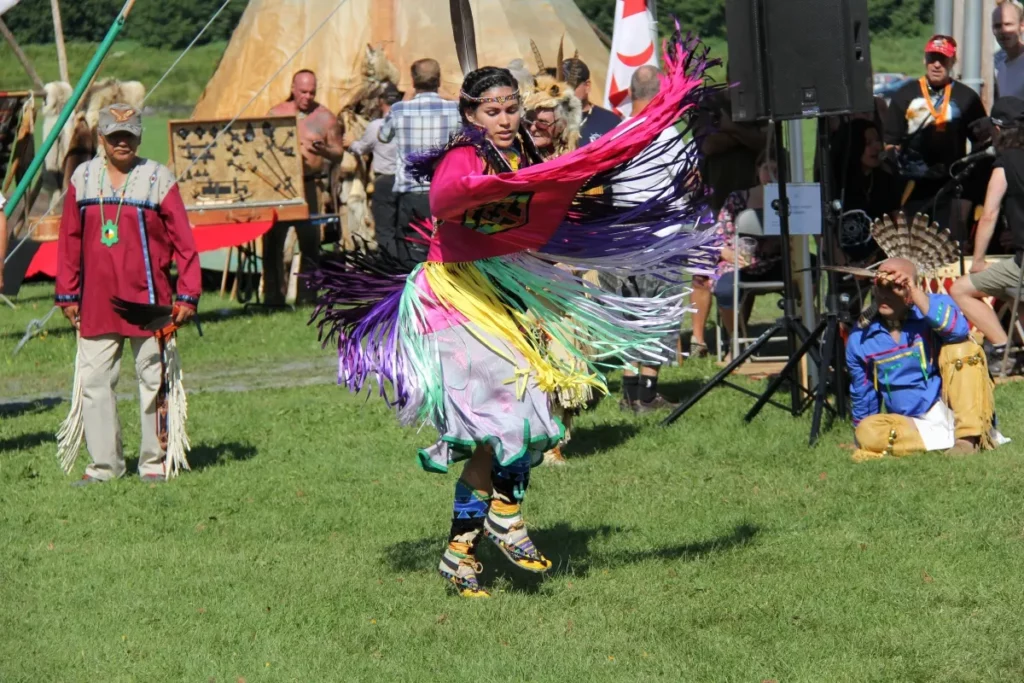
The W8linak Pow Wow is an Indigenous cultural gathering that celebrates dance, music, drumming, and regalia in a spirit of sharing and respect.
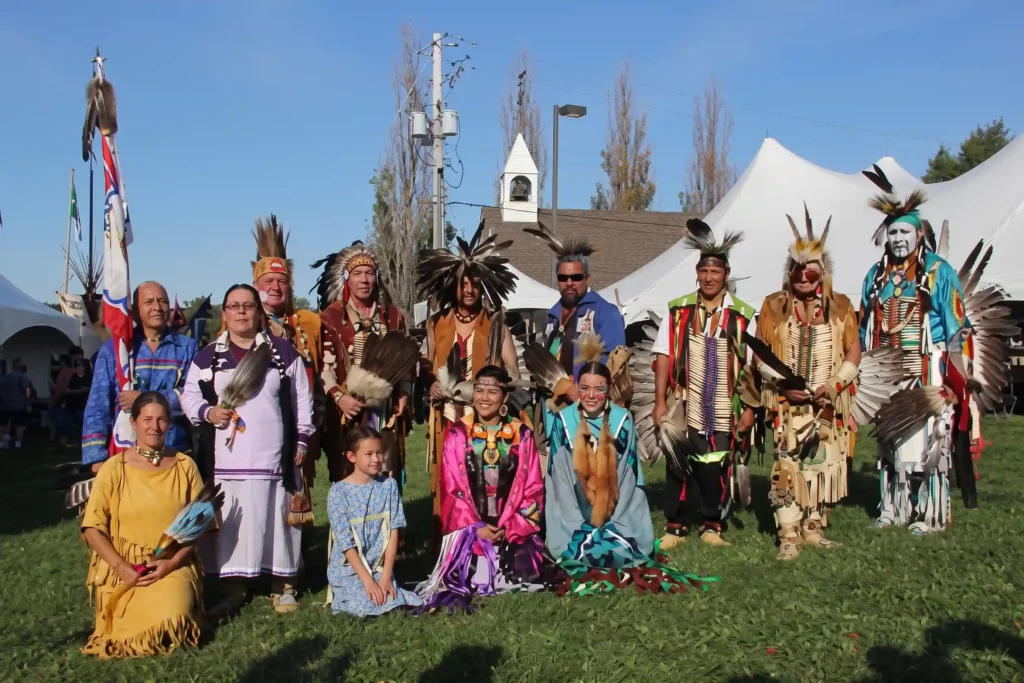
Above all, it is a gathering: a meeting between Indigenous Nations, across generations, and with the general public. Through precise protocols, traditional and contemporary dances, and the central role of the circle, Indigenous cultures are expressed, passed down, and lived to the fullest. Today, the Pow Wow continues to play an essential role in cultural affirmation and bringing people together. Open to both Indigenous and non-Indigenous communities, it offers a deeper understanding of the traditions, values, and identities that shape the Nations of yesterday and today.
Of all the moments in a Pow Wow, the Grand Entry (la Grande Entrée) is the most solemn and ceremonial. It is the opening ceremony that sanctifies the dance arena and honors the participants. It is led by the flag bearers: carrying the flags of the host nation and other nations, the First Nations veterans flag, the flag for children, and the flag for women. They are followed by the Eagle Staff bearer, veterans, elders, children, women, and the dancers, organized by category.